top of page

In the dynamic world of music education, students often grapple with the challenge of embracing the unfamiliar. The resistance to delve into uncharted musical territories can be attributed to cognitive biases, creating narratives that shield them from facing difficult tasks. To shed light on this issue, let's explore common biases in the context of an anecdote that recently unfolded during one of my drum lessons.


**The Fixed Mindset Dilemma: A Drumming Anecdote**


Just last week, a drum student inquired about rimfills—a seemingly innocuous question that opened the door to a profound exploration of mindset. Eager to nurture his curiosity, I introduced drumfills to our lessons. However, as soon as he realized that executing drumfills required structured patterns rather than random hits across the drum kit, a shift occurred.


Almost instantly, he declared his newfound disinterest in drumfills, expressing frustration that he could no longer play haphazardly. This episode serves as a clear manifestation of a fixed mindset—a mindset that recoils when confronted with the discomfort of structured challenges. The initial excitement gave way to the discomfort of not being able to rely on randomness, highlighting a common tendency among music students to resist stepping out of their comfort zones.


**1. The Familiarity Fallacy Revisited**


In light of this anecdote, the "familiarity fallacy" takes on a new dimension. The drum student's initial enthusiasm for drumfills was rooted in the novelty of the concept. However, the discomfort of structured patterns led him to retreat to the familiar territory of random drumming, reinforcing the bias against embracing new, more structured elements.


*Solution:* Address the familiarity fallacy by emphasizing that structured challenges, such as drumfills with specific patterns, contribute to a drummer's toolkit, enhancing their overall musical expression.


**2. The Effort Excuse Unveiled**


The abrupt shift in the student's attitude exposes the "effort excuse" at play. The perception of increased difficulty became a justification for abandoning the pursuit of drumfills altogether. This tendency to avoid challenging tasks, especially when effort and structure are required, is a classic symptom of a fixed mindset.


*Solution:* Counter the effort excuse by reframing the challenge as an opportunity for skill development. Break down the structured patterns into manageable segments, encouraging incremental progress and a positive approach to effort.


**3. The Comparison Conundrum in Drumming**


In this drumming anecdote, the comparison conundrum emerges subtly. The student's desire to revert to random drumming may have been influenced by a perceived ease of comparison—random beats are less likely to be critiqued or compared to the structured precision of drumfills.


*Solution:* Shift the focus from external comparisons to individual growth. Encourage students to appreciate the unique value of each musical element they explore, fostering a mindset centered on personal progress.


**4. The Perfection Paralysis on the Drum Kit**


The fixed mindset's impact on the student's perception of drumfills reflects the "perfection paralysis." The fear of not being able to execute the fills perfectly hindered his willingness to engage with this new challenge.


*Solution:* Emphasize the iterative nature of learning drumfills. Celebrate progress, encourage experimentation, and reinforce that imperfections are stepping stones toward mastery.


In conclusion, the drumming anecdote highlights the pervasive influence of a fixed mindset in music education. By recognizing and addressing biases such as the familiarity fallacy, effort excuse, comparison conundrum, and perfection paralysis, educators can guide students toward a growth-oriented mindset. Through patient encouragement, a focus on personal progress, and the celebration of small victories, students can break free from cognitive biases and embark on a fulfilling musical journey marked by continuous exploration and improvement.


Let's dissect an intriguing aspect of learning music, focusing on the economics of a single note. Imagine this: initially, each note you play costs £2. Sounds steep, doesn't it? But here's where it gets fascinating. This isn't just about the financials. It's about investment, the kind that transcends monetary value.


In the nascent stages of your musical journey, you're embarking on a voyage through uncharted melodies. Those first 25 notes? They're not mere sounds; they're monumental steps into the expansive, boundless realm of music. Each one, at a price tag of £2, represents a cornerstone of your foundation in this art.


Here's the twist: the learning curve. Those early notes, costly as they may seem, are about more than just playing music. They're about understanding it, grappling with it, and eventually, mastering it. This phase, where each note carries a significant weight (both financially and in terms of effort), is where the magic happens. It's where you transform from a novice into a nascent musician, ready to explore the vast symphony of sounds.


Now, fast forward. You persevere, embrace the curve, and immerse yourself in the rhythm of learning. The cost per note starts to plummet, not just to pennies but to a mere £0.025. Why? Because you've moved beyond the basics. You're now fluent in the language of music, playing thousands of notes, each weaving into the next, crafting melodies that resonate with your soul.


But let's circle back to our initial question: It's all about the money, right? Wrong. It's about value. The real treasure lies not in the notes themselves but in the journey they represent. From those first costly steps to the sweeping movements that follow, each note is an investment in your growth, your passion, and your voice in the world of music.


At Music Lab, we see beyond the price tags. We see the potential in every student, the transformative power of music, and the unparalleled value of perseverance and commitment. So, yes, in the beginning, it might seem like it's all about the money. But in truth, it's about investing in something far greater: your musical journey, one note at a time.


And that, dear reader, is priceless.


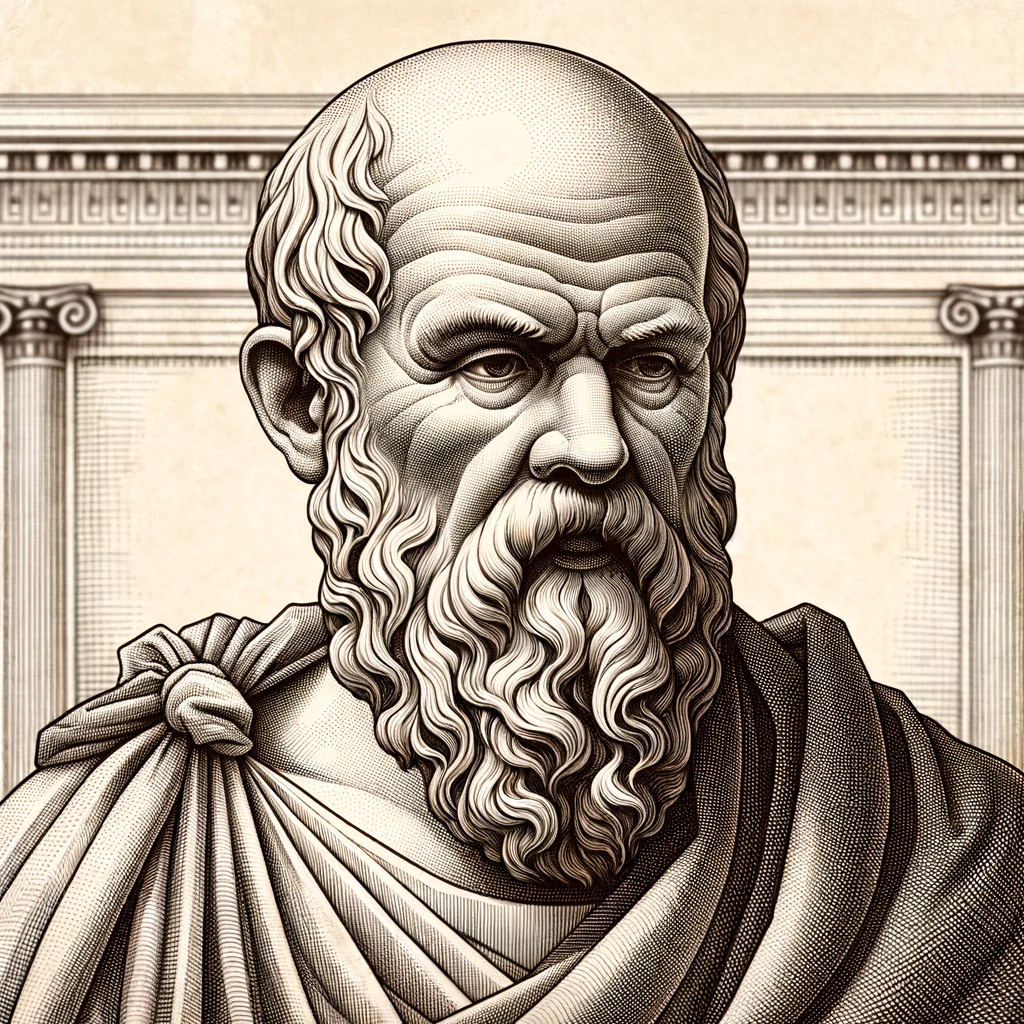
So, who is this Socrates? Born in Athens around 470 BCE, Socrates is a foundational figure in Western philosophy, primarily known through the accounts of his students, like Plato, and the playwright Aristophanes. Unlike many philosophers of his time, Socrates left no written works. Instead, he developed a unique method of philosophical inquiry known as the Socratic method, which involves asking probing questions to stimulate critical thinking and illuminate ideas.


Socrates' approach to education and philosophy, characterized by dialogue and the relentless questioning of assumptions, deeply influenced the intellectual landscape of Athens. His life intertwined with the city's social and political dynamics, often challenging its norms and values. This led to his trial and execution in 399 BCE on charges of corrupting the youth and impiety.


Despite his execution, Socrates' legacy endures. His method of questioning and his pursuit of knowledge and wisdom have profoundly influenced not only philosophy but also the broader realm of education, encouraging a critical examination of beliefs and values across centuries.


Socratic learning emphasizes the importance of asking and answering questions to stimulate critical thinking and to illuminate ideas. This approach can be transformative in music education, encouraging students to explore beyond the mere technical execution of pieces to a deeper understanding of music theory, history, and expression.


The essence of Socratic learning is the dialogue between teacher and student, aimed at fostering deep understanding and critical thinking. In music education, this can significantly enhance a student's performance and appreciation of music by encouraging them to explore their thoughts, questions, and interpretations.


The interactive nature of Socratic learning fosters a deeper teacher-student relationship. In music education, this relationship influences a student's motivation, confidence, and willingness to explore new musical territories. Teachers can tailor their instruction to each student's interests and needs, thereby enhancing the educational experience.


Socratic learning helps students develop a growth mindset. By focusing on the process of learning rather than the end result, students learn to view challenges as opportunities for growth. This is particularly important in music, where mastering an instrument or a piece can be a long process.


Socratic learning encourages students to explore the broader context of the music they study. This holistic approach to music education prepares them to be well-rounded musicians who can contribute meaningfully to the cultural and artistic landscape of the 21st century.


Practical Examples of Socratic Learning


For Students:

1. Reflective Listening: After performing a piece, students are asked to reflect on their performance and identify areas of improvement and strengths. This encourages self-assessment and critical thinking about their own playing.

2. Interpretation Discussion: Students engage in discussions about the emotional content and historical context of a piece they are learning. This fosters a deeper understanding of the piece beyond its technical aspects.

3. Theory Application: Students are asked to identify and explain the use of music theory elements in their pieces, promoting a practical understanding of music theory.

4. Performance Review: Students critique recorded performances of themselves or peers, focusing on technique, expression, and musicality. This helps develop analytical skills and a deeper understanding of musical performance.

5. Composition Questions: Students create their own short compositions after being prompted with questions about mood, structure, and thematic material. This nurtures creativity and a practical application of music theory.


For Teachers:

1. Question-Based Lesson Plans: Design lesson plans that are centered around key questions guiding the learning process, encouraging students to explore and discover answers through dialogue.

2. Socratic Circles: Facilitate group discussions in a circle, where students lead the conversation about a piece of music or a musical concept, promoting peer learning and critical thinking.

3. Critical Listening Sessions: Organize listening sessions where students analyze and discuss various interpretations of the same piece, encouraging a deeper understanding of artistic choices.

4. Theory Through Inquiry: Teach music theory concepts through a series of guided questions that lead students to discover the principles on their own.

5. Performance Feedback Sessions: Conduct sessions where students perform in front of the class and engage in a guided discussion about the performance, focusing on constructive feedback and personal reflection.


For Parents:

1. Music Appreciation Discussions: Engage in conversations about music listened to at home, asking questions about emotions, instruments, and styles, to encourage active listening and critical thinking.

2. Practice Reflections: After practice sessions, ask children to articulate what they focused on and what challenges they encountered, promoting self-reflection and problem-solving skills.

3. Concert Reflections: Attend concerts or live performances together and discuss the performance afterward, focusing on what was learned and what was most impactful.

4. Historical Context Conversations: Discuss the historical context of the pieces their child is learning, asking questions that encourage research and deeper understanding.

5. Goal-Setting Discussions: Have regular discussions about musical goals and aspirations, using questions to guide reflections on progress and future steps, fostering motivation and a growth mindset.


These practical examples illustrate how Socratic learning can be applied across different contexts in music education, benefiting students, teachers, and parents by promoting critical thinking, deep understanding, and a love for learning.


In contemplating the journey through Socratic learning in music education, one might ponder the transformative impact it has on students, teachers, and parents alike. Does the method merely enhance the technical skills necessary for musical proficiency, or does it delve deeper, enriching the soul and expanding the mind beyond the confines of traditional education? The evidence suggests it's the latter, as Socratic questioning guides learners through a labyrinth of self-discovery, critical analysis, and emotional depth.


But what does this mean for the future of music education in the 21st century? Can the principles of Socratic learning, rooted in ancient philosophy, truly resonate in the digital age, where information is vast and attention spans are challenged? Perhaps the answer lies not in the method itself, but in our ability to adapt and integrate these timeless principles into modern pedagogical practices.


Consider the role of technology in music education: does it serve as a barrier to genuine understanding, or can it be harnessed to deepen our inquiry and exploration? As educators, parents, and students, we are faced with choices about how we engage with music and each other. How can we use Socratic methods to challenge our assumptions, foster genuine dialogue, and promote a deeper appreciation of music that transcends technical mastery?


In reflecting on these questions, we recognize the essence of Socratic learning in music education: it is not merely a teaching method but a way of thinking, questioning, and engaging with the world. It encourages us to explore the unknown, to embrace the complexity of musical expression, and to understand our own experiences and emotions through the universal language of music.


As we ponder the future of music education, let us embrace the spirit of inquiry and dialogue that Socrates championed. Let us ask not only how we can teach, but how we can inspire, challenge, and transform through the power of music. The journey is not one of finding the right answers, but of asking the right questions. And in this journey, may we all discover not just the notes on the page, but the music within ourselves.


bottom of page